Best Skincare for Men Who Work Outdoors
Affiliate Disclosure: This article contains affiliate links. If you purchase through these links, we may earn a commission at no extra cost to you. As an Amazon Associate I earn from qualifying purchases. Full Disclosure
If you spend your workdays outside — on a construction site, in the field, behind a mower, on a roof, or anywhere under the open sky — your skin is working under conditions most skincare guides completely ignore.
You’re not dealing with office lighting and climate-controlled air. You’re dealing with direct UV exposure for eight or more hours, wind, sweat, dust, chemical exposure, and temperature extremes. That combination accelerates skin aging faster than almost any other lifestyle factor. And the most dangerous part — skin cancer risk — builds quietly over years without any visible warning signs until the damage is already done.
This guide is written specifically for you. No complicated ten-step regimes. No products that won’t survive a workday. Just practical, effective skincare that holds up under real conditions.
Why Outdoor Workers Need a Different Approach
Standard skincare guides are written for men with office jobs who face mild environmental stress. The recommendations — gentle cleansers, lightweight daily SPF, occasional serums — are appropriate for that context.
Outdoor workers operate in a fundamentally different environment. Here’s what that means for skin:
UV exposure is cumulative and relentless. A man working outdoors for 10 years has received vastly more ultraviolet radiation than his office-working counterpart. UV damage is the primary driver of premature skin aging (wrinkles, sunspots, loss of elasticity) and the leading cause of skin cancer. Carpenters, roofers, landscapers, and farmers are among the highest-risk occupational groups for skin cancer.
Wind causes dryness and barrier damage. Persistent wind strips moisture from the skin surface and damages the lipid barrier over time. Men who work in windy conditions — particularly in winter or at elevation — frequently develop chronic dryness, rough texture, and increased sensitivity.
Sweat changes how products perform. SPF designed for low-activity, indoor-mostly wear loses effectiveness much faster when you’re sweating. Outdoor workers need water-resistant or sport formulas with a concrete reapplication strategy.
Dust, chemicals, and physical debris require effective cleansing. Construction dust, landscaping debris, and chemical residues from jobsite materials require more thorough cleansing than a standard gentle wash provides.
Heat and physical labor increase oil production. Men who do physical work tend to run hotter, sweat more, and produce more sebum. Products designed for sedentary skin conditions may not manage this effectively.
The Core Outdoor Worker Skincare Routine
This routine is built for practicality first. Every step has a clear, non-negotiable reason for being there.
Morning: Before You Start Work
Step 1: Cleanse
Start the day with a clean face. Sleeping skin accumulates oil and any product residue from the night before. Cleansing before applying SPF ensures the sunscreen bonds directly to clean skin rather than sliding over a layer of overnight buildup.
Use a gentle but effective cleanser — gel or foaming for oily skin, cream or hydrating for dry or sensitive skin. Avoid harsh scrubs in the morning; you don’t want to start the day with irritated skin that’s about to take a beating outdoors.
Step 2: Apply SPF — and Make It a Real One
This is the most important step in your entire routine. Not optional. Not something to squeeze in on hot days. Every single day of outdoor work, without exception.
SPF 50 broad-spectrum is the standard we recommend for full-day outdoor workers. Broad-spectrum means it blocks both UVA (aging rays) and UVB (burning rays). SPF 30 is the absolute minimum.
Apply generously — a thin layer of sunscreen is significantly less effective than a proper application. Cover the face, neck, ears, and the back of the neck if your hair is short. These areas receive consistent UV exposure and are frequent sites of skin cancer in outdoor workers.
Step 3: Lip Balm with SPF
Lips are consistently overlooked in sun protection and are a surprisingly common site for sun damage in men who work outdoors. An SPF 30 lip balm takes three seconds to apply and provides meaningful protection.
Midday: Reapplication Is Non-Negotiable
This is where most men fail at outdoor SPF. Sunscreen applied at 6am does not provide meaningful protection at 2pm — particularly not when you’ve been sweating.
The standard guideline is reapplication every 2 hours during sun exposure. For practical outdoor workers, that means at least one midday reapplication during peak UV hours (10am to 4pm).
The challenge: you’re on a jobsite with dirty hands, you’re busy, and pulling out a tube of face sunscreen feels impractical. The solution: carry a spray or stick SPF formulated for sport use. No clean hands required. Spray or swipe it on in 15 seconds and keep working.
Evening: Repair and Recover
Your evening routine does the heavy lifting of repairing the day’s damage. It doesn’t need to be complex — but it does need to happen.
Step 1: Thorough Cleanse
After a day outdoors, your skin has accumulated sweat, SPF residue, sunscreen components that have oxidized, dust, and environmental pollutants. A single pass with a gentle cleanser may not be enough. Consider double cleansing on heavy days: an oil-based cleanser first (removes SPF and oil-based debris), followed by a water-based gel or foam cleanser.
Step 2: Repair Moisturizer
This is your primary skin repair tool. For outdoor workers, we recommend a moisturizer that contains ceramides and/or niacinamide — ingredients that actively rebuild the skin’s lipid barrier rather than just sitting on top of it.
Apply while skin is still slightly damp for maximum absorption. Don’t skip this step because your skin feels “fine.” Barrier-reinforcing moisture prevents the chronic dryness and rough texture that builds gradually over months and years of outdoor work.
Step 3 (Optional but Recommended): Targeted Treatment
If you can add one more product to your evening routine, a vitamin C serum applied before moisturizer provides antioxidant defense against the oxidative stress UV exposure creates throughout the day. It also helps prevent and fade the hyperpigmentation (dark spots) that develops from cumulative sun exposure.
Alternatively, a retinol applied 2–3 nights per week addresses skin texture, early sun damage, and cell turnover. Oily-skinned outdoor workers tend to tolerate retinol well.
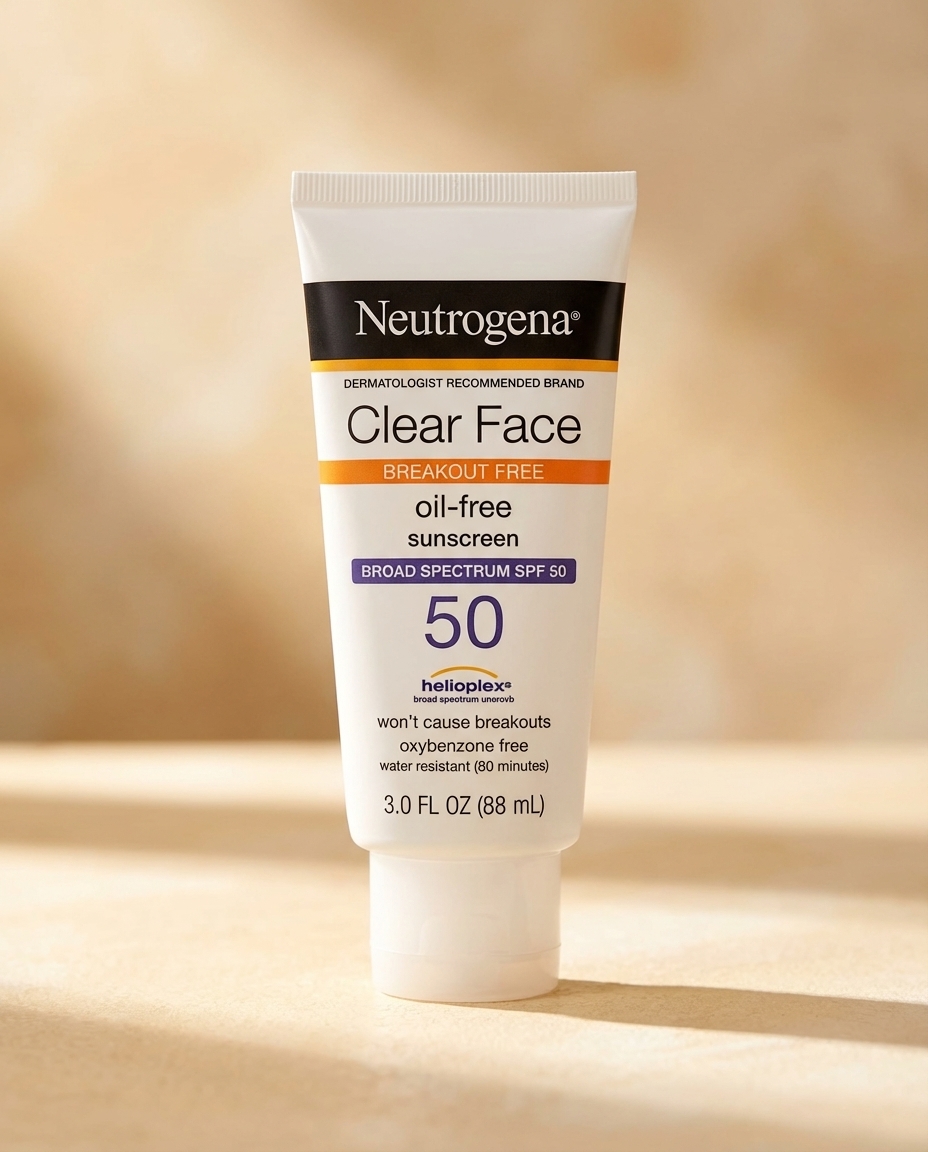
Our Recommended Products for Outdoor Workers
These products are selected specifically for the conditions outdoor workers face: high UV exposure, sweat, and practical application requirements.
Dealing With Specific Outdoor Work Skin Issues
Sun-Damaged Skin and Dark Spots
If you’ve been working outdoors for years without adequate sun protection, you likely have some degree of sun damage — dark spots, uneven tone, or a rougher texture than your age would otherwise warrant.
The most effective ingredients for addressing existing sun damage: vitamin C (antioxidant, brightening), retinol (cell turnover, texture), and daily SPF to prevent further damage. Consistent use of all three over 3–6 months produces visible improvement.
Dark spots specifically respond well to niacinamide at 10%, kojic acid, and alpha arbutin. These can be found in targeted serums.
Windburn and Chronic Dryness
Windburn looks and feels like mild sunburn — redness, tightness, sensitivity — but is caused by wind rather than UV. In cold weather or at elevation, it can be severe.
Prevention: apply a protective balm or occlusive moisturizer to exposed skin before going out in harsh wind conditions. Something like Vaseline or CeraVe Healing Ointment applied to cheeks, nose, and lips before working in cold, windy conditions provides a meaningful physical barrier.
Treatment: same principles as sunburn — cool water, fragrance-free moisturizer with ceramides, no harsh products, and time.
Chemical and Material Exposure
Men who work with concrete, solvents, pesticides, oils, or other chemicals face additional skin exposure risks. Always wear appropriate protective gear for the material in question. For routine skin care, thorough evening cleansing is essential — don’t let chemical residues sit on skin overnight.
Preventing Skin Cancer: The Long Game
Skin cancer risk is the reason this guide matters most. Outdoor workers are among the highest-risk populations because of cumulative UV exposure over a career.
The practical prevention approach: consistent daily SPF (starting now, not “eventually”), wearing a wide-brim hat when possible, covering arms during peak UV hours, and annual skin checks with a dermatologist. If you’ve never had a professional skin check and you work outdoors, schedule one. Early detection is almost always curative.
Practical Tips for Sticking With It on the Job
The biggest barrier for outdoor workers adopting skincare isn’t awareness — it’s practicality. Here’s how to make it actually work on a jobsite:
Morning takes two minutes. Cleanser while showering, SPF and lip balm after. Set both products on the bathroom counter the night before so they’re visible.
Keep spray SPF in your truck or work bag. This makes midday reapplication achievable without needing clean hands or a bathroom. A spray sunscreen takes 15 seconds.
The evening routine can be brief. Cleanser in the shower + barrier moisturizer after. That’s it for most days. The retinol or vitamin C can be added 3 nights a week, not daily.
Your crew doesn’t need to know. Men who work with their hands often feel self-conscious about skincare. You don’t need to announce it. It takes three minutes in the privacy of your own home and prevents skin cancer. That’s the whole pitch.
The Bottom Line
Men who work outdoors earn their wear on their skin the hard way. But earning it doesn’t mean accepting premature aging, chronic dryness, or elevated skin cancer risk as inevitable consequences of the job.
A practical morning SPF application, a single midday reapplication, and an evening moisturizer is a meaningful routine that takes under five minutes per day. It’s the minimum viable investment that prevents maximum long-term damage.
Start with SPF 50 every morning. Everything else builds from there. For men newer to skincare in general, our New Year skincare resolutions guide is a good parallel read — it walks through building a beginner routine from scratch.
If you’re also managing shaving irritation on top of the environmental stress your skin faces, the tips in our razor burn and ingrown hairs guide apply directly to your situation.
Take care of the skin. It’s the only one you’ve got, and you’re putting it through more than most.
Recommended Products
Neutrogena Clear Face Sunscreen Lotion for Acne-Prone Skin
by Neutrogena
What We Like
- Top-rated in its category
- Well-reviewed by skincare enthusiasts
Could Be Better
- Check Amazon for current availability
Frequently Asked Questions
Do men who work outdoors really need a skincare routine?
Yes — more than most. Men who work outdoors receive dramatically more UV exposure, wind, and environmental stress than those who work indoors. This accelerates skin aging, increases skin cancer risk, and causes chronic dryness and irritation without proper protection.
What SPF should men who work outdoors use?
At minimum, SPF 30 broad-spectrum. We recommend SPF 50 for full-day outdoor exposure. Reapplication every 2 hours during peak sun hours (10am–4pm) is essential — SPF applied once in the morning does not last a full workday outdoors.
How do I apply sunscreen when I'm sweating or working with dirty hands?
Apply SPF to a clean face before starting work. For reapplication midday, spray or stick sunscreens are the most practical option for working men — no clean hands required. Powder SPF is another option over existing product.
What causes windburn and how do I treat it?
Windburn is caused by cold wind stripping moisture from the skin, leading to redness, tightness, and inflammation — similar to mild sunburn. Treat it with a fragrance-free, barrier-repairing moisturizer containing ceramides. Prevention involves applying a wind-blocking balm or occlusive product before exposure.
Is skincare practical for construction or labor jobs?
Absolutely. The most effective outdoor worker skincare routines involve two products applied in the morning (cleanser and SPF) and two at night (cleanser and moisturizer). That's a four-minute daily investment that prevents years of premature skin damage.