What Does Hyaluronic Acid Actually Do? A Man's Guide
Affiliate Disclosure: This article contains affiliate links. If you purchase through these links, we may earn a commission at no extra cost to you. As an Amazon Associate I earn from qualifying purchases. Full Disclosure
Skincare marketing has a habit of turning simple concepts into intimidating science. Hyaluronic acid is a prime example: the name sounds like a lab experiment, but the actual function is straightforward and the benefits are among the most consistently demonstrated in skincare science.
This guide breaks down what hyaluronic acid actually is, what it does to your skin, why it matters specifically for men, and how to use it correctly. No excess complexity.
What Is Hyaluronic Acid?
Hyaluronic acid (HA) is not an acid in the corrosive sense. The “acid” in its name refers to its chemical classification — it’s a glycosaminoglycan, which is a type of carbohydrate molecule found naturally in the human body.
Your body produces hyaluronic acid on its own. It’s found in high concentrations in:
- The fluid that lubricates your joints
- The vitreous humor of your eyes
- Connective tissue throughout the body
- And most relevantly: your skin
In skin, hyaluronic acid is a key structural component of the extracellular matrix — the scaffolding that keeps skin firm, plump, and smooth. It’s found in both the dermis (deep skin layer) and the epidermis (surface layer).
The critical property of hyaluronic acid is its extraordinary ability to bind and retain water. A single molecule of HA can hold up to 1,000 times its own weight in water. This is not a marketing claim — it’s a measurable physical property that has been documented extensively in biochemical research.
Why Your Skin Loses Hyaluronic Acid Over Time
This is where the practical relevance for men becomes clear.
At birth, the body produces hyaluronic acid abundantly. Skin is plump, resilient, and fast to recover. By around age 25, the body’s natural production begins to decline. By age 40, the skin contains roughly half the hyaluronic acid it had in youth. By 60, that figure drops further still.
The visible results of this decline are exactly what most men associate with aging:
- Skin that looks and feels drier
- Deeper lines and wrinkles, particularly around the eyes and mouth
- Loss of the “bounce” that skin has when pressed gently
- Dull, less luminous skin tone
Sun exposure accelerates this process. UV radiation degrades hyaluronic acid in the skin and suppresses its production. This is another reason why consistent sunscreen use — covered in our SPF and anti-aging guide — matters so much for long-term skin quality.
What Topical Hyaluronic Acid Actually Does
When you apply a hyaluronic acid serum or moisturizer, you’re introducing HA from outside the skin. Here’s what happens:
Surface hydration: Hyaluronic acid on the surface of skin draws water from the environment and from deeper skin layers, keeping the outermost skin cells (corneocytes) hydrated. This immediately improves the appearance and feel of skin — it looks less dull, feels less tight, and fine lines caused by dehydration become less visible.
Barrier support: Well-hydrated skin maintains a more intact skin barrier — the protective layer that keeps irritants out and moisture in. Chronic dehydration compromises this barrier, leading to sensitivity, redness, and faster environmental damage.
Deeper penetration (with the right molecular weight): This is where product formulation matters significantly. Hyaluronic acid molecules come in different sizes, measured in kilodaltons (kDa). Large molecular weight HA (high kDa) stays on the skin surface and provides intense surface hydration. Small molecular weight HA (low kDa) can penetrate into deeper skin layers for more sustained effects.
The best HA products include both high and low molecular weight forms to cover multiple skin depths.
Molecular Weight: Why It Matters
Most men will never read a skincare ingredient list with this level of detail, but understanding molecular weight explains why some HA products feel dramatically more effective than others.
High molecular weight HA (above 300 kDa): Forms a film on skin surface, immediate plumping effect, good for dry surface texture, does not penetrate deeply. This is what most budget HA products contain.
Low molecular weight HA (below 100 kDa): Penetrates into the epidermis and upper dermis, provides more sustained hydration, may stimulate collagen production at very low molecular weights. Requires more sophisticated formulation.
Sodium hyaluronate: A salt form of hyaluronic acid that is more stable and absorbs more readily into skin. You’ll see this on ingredient lists instead of “hyaluronic acid” — it functions identically for practical purposes.
Cross-linked HA: Used in injectable fillers, not typically in topical products. Ignore this distinction for topical skincare.
When evaluating a product, look for multiple forms of HA listed in the ingredients, or products that specifically state “multi-weight hyaluronic acid” or similar language.
Is Hyaluronic Acid Different for Men?
Men’s skin has some biological differences that affect how HA performs and how much they need it.
Men’s skin is approximately 25% thicker than women’s due to higher androgen levels. It also produces more sebum (oil) — which provides some natural moisture retention but can also mask underlying dehydration. Many men with oily skin are actually dehydrated beneath the surface, which drives continued oil production as the skin tries to compensate.
Higher testosterone levels also mean men lose hyaluronic acid at different rates through the lifespan. Studies suggest men’s skin may thin more dramatically after a certain age threshold compared to women, making proactive HA use particularly relevant for men in their 40s and beyond.
The good news: HA is effective across skin types and both sexes. Its mechanism — water retention — is consistent regardless of skin thickness or sebum production.
How to Use Hyaluronic Acid Correctly
The Damp Skin Method
The most important thing to know about using hyaluronic acid: apply it to damp skin.
HA is a humectant — it draws moisture from its environment. If your skin is completely dry and the air around you is low humidity (common in winter or air-conditioned environments), HA can actually pull moisture from deeper skin layers rather than the environment. This can leave skin feeling drier than before application.
The fix is simple: pat your face dry after cleansing but leave it slightly damp, then apply HA immediately. The residual water gives HA something to work with on the skin surface.
Always Seal with Moisturizer
Apply a moisturizer on top of hyaluronic acid serum. This locks the moisture in and prevents evaporation. HA draws water in; moisturizer keeps it there. Skipping this step significantly reduces the benefit.
Routine Placement
Apply hyaluronic acid in this order within your routine:
- Cleanse
- Apply hyaluronic acid serum (on damp skin)
- Apply any other treatment serums (niacinamide, vitamin C)
- Moisturize
- Sunscreen (morning only)
If you’re building a routine from the ground up, our 3-step skincare routine guide covers the complete framework.
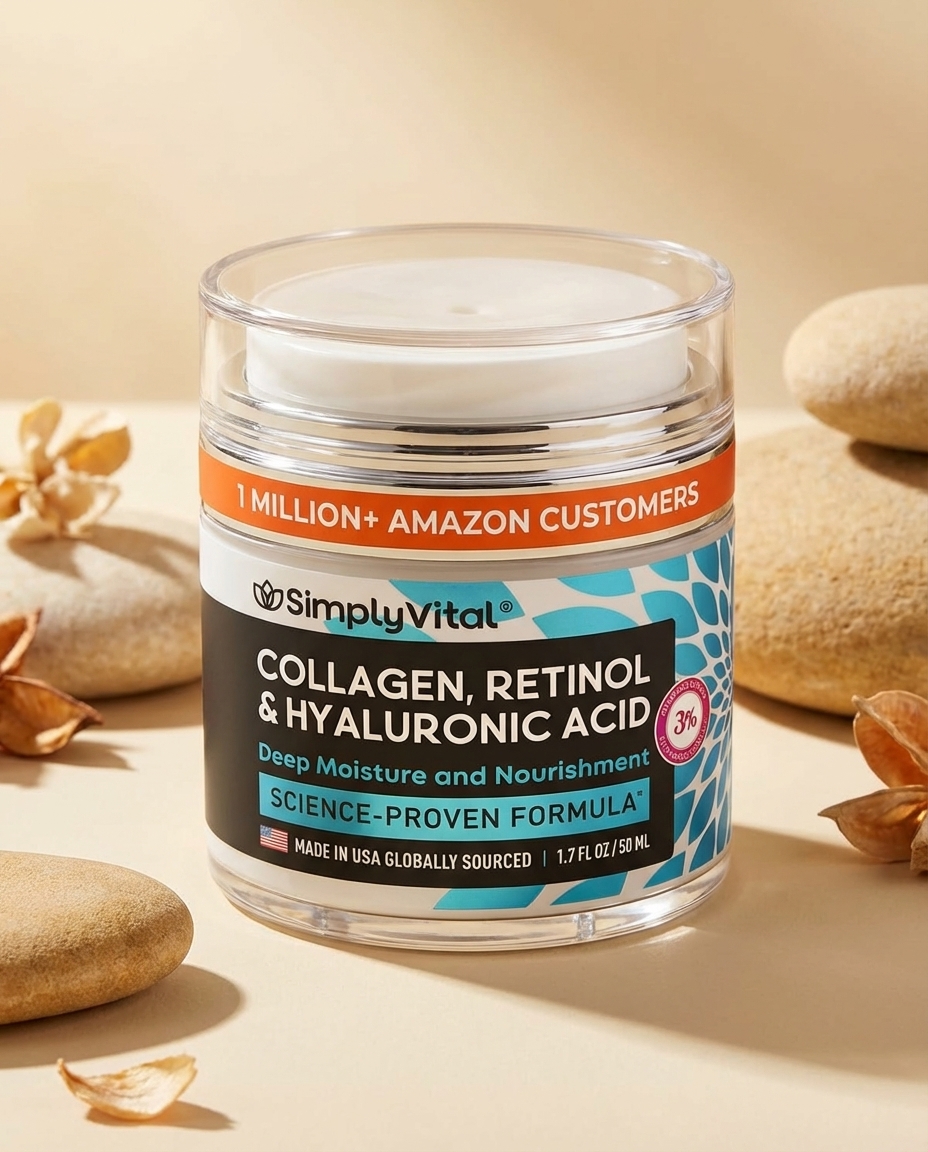
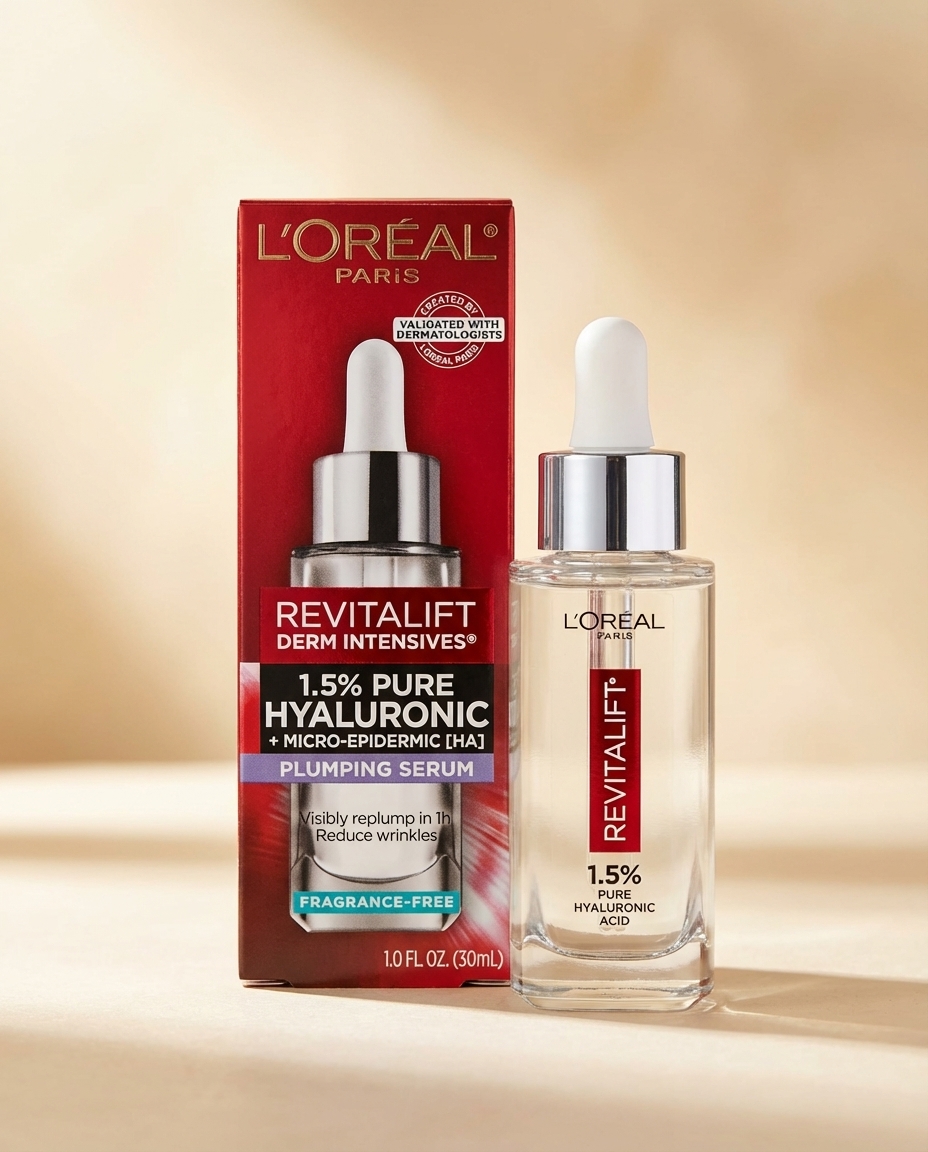
Our Recommended Hyaluronic Acid Products
For a Pure HA Serum
For a Moisturizer with Built-In HA
For a More Complete Formula
What to Expect and When
First 24–48 hours
Immediate improvements in skin comfort. Skin feels less tight after cleansing. Fine lines from dehydration look less pronounced. The skin surface looks more uniform and less dull.
2–4 weeks
More consistent plumping effect. Skin feels measurably more supple. Skin barrier function improves as hydration levels stabilize, which can reduce sensitivity and redness.
2–3 months and beyond
With consistent use, the cumulative effect on skin quality becomes apparent. Skin looks healthier overall. The most visible changes are in texture and the appearance of fine lines.
Note: HA does not repair existing deep wrinkles or sun damage. It hydrates skin, which makes lines caused by dehydration less visible, but it does not replace the collagen-building work done by ingredients like retinol. For men over 40, HA is typically part of a broader routine rather than a standalone solution — see our guide on men’s skincare after 40 for how these ingredients work together.
Hyaluronic Acid vs. Other Hydrating Ingredients
Men often ask how HA compares to other ingredients they’ve seen on labels.
Glycerin: Another humectant, similar to HA in mechanism. Less expensive, very effective, widely used in drugstore products. Less “marquee” but performs comparably for basic hydration. Many products use both.
Aloe vera: A popular natural ingredient with decent surface hydration properties. Does not match HA’s water-binding capacity. A reasonable option but not a direct substitute.
Ceramides: A different category entirely. Ceramides are lipids (fats) that form part of the skin barrier. They work with HA rather than in place of it — ceramides keep moisture in, HA draws it in. Together they’re a strong combination. CeraVe products combine both.
Squalane: A lightweight oil derived from plants. Prevents water loss (occlusive action) rather than adding hydration. Used effectively on top of HA serums as a complementary ingredient.
Common Mistakes Men Make with Hyaluronic Acid
Using it on completely dry skin in a dry environment. As discussed, this can backfire. Always use on slightly damp skin and follow with moisturizer.
Expecting it to replace moisturizer. HA is a humectant — it draws in water. A moisturizer contains occlusives and emollients that seal that moisture and nourish the skin barrier. You typically need both.
Using it only occasionally. The benefits of HA accumulate with consistent use. Using it randomly doesn’t deliver the same results as using it daily.
Assuming more is better. A thin layer of HA serum is sufficient. Applying a thick coat doesn’t add benefit and may feel uncomfortable or pill under moisturizer.
The Bottom Line
Hyaluronic acid is one of the most well-researched, well-tolerated, and consistently effective ingredients in skincare. It works across all skin types, causes virtually no side effects, and addresses a fundamental need — hydration — that every man’s skin has regardless of age or skin type.
If you’re building a skincare routine and wondering where to start with ingredients, HA is one of the safest and most rewarding choices. Apply it to damp skin, follow with moisturizer, use it daily. The results are visible and the process takes seconds.
Recommended Products
Anti-Aging Face Moisturizer with Retinol
by Anti-Aging
What We Like
- Top-rated in its category
- Well-reviewed by skincare enthusiasts
Could Be Better
- Check Amazon for current availability
L'Oreal Paris Revitalift 1.5% Pure Hyaluronic Acid Serum for
by L'Oreal
What We Like
- Top-rated in its category
- Well-reviewed by skincare enthusiasts
Could Be Better
- Check Amazon for current availability
Frequently Asked Questions
Does hyaluronic acid work for oily skin?
Yes. Hyaluronic acid is water-based and weightless. It adds hydration without any oil content, making it ideal for oily or combination skin. It can actually reduce oiliness over time by giving skin adequate hydration so it stops overproducing sebum.
When should I apply hyaluronic acid in my routine?
Apply hyaluronic acid serum after cleansing and before moisturizer. For best results, apply it to slightly damp skin — hyaluronic acid draws moisture from its environment, so a little water on the skin helps it work better.
Is hyaluronic acid safe to use every day?
Yes, it's one of the safest and gentlest skincare ingredients available. It's well-tolerated by virtually all skin types including sensitive and reactive skin. Daily use morning and evening is appropriate.
What's the difference between 1% and 2% hyaluronic acid?
Higher concentrations are not always better with HA. The molecular weight matters more than concentration. Products with both high and low molecular weight HA work at different skin depths for broader hydration effects.
Can I use hyaluronic acid with retinol or vitamin C?
Yes. Hyaluronic acid is compatible with virtually all other skincare ingredients. It's often used to buffer the potential dryness and irritation caused by retinol, making it a good pairing.