How to Get Rid of Dark Circles: A Complete Guide for Men
Affiliate Disclosure: This article contains affiliate links. If you purchase through these links, we may earn a commission at no extra cost to you. As an Amazon Associate I earn from qualifying purchases. Full Disclosure
Dark circles are one of the most common cosmetic concerns among men, and one of the most misunderstood. Most men assume they’re purely a sleep problem. If that were true, they’d disappear after a good night’s rest. For many men, they don’t.
The reality is that dark circles have multiple distinct causes, and effective treatment depends on identifying which type you have. A caffeine eye cream won’t fix pigmentation. More sleep won’t address hollowing. This guide covers the full picture: what causes dark circles, what actually works, and what realistic expectations look like.
The 4 Types of Dark Circles
Dark circles are not a single condition. There are four main mechanisms, and many men have a combination.
Type 1: Vascular (Blue/Purple Darkness)
The most common type. The thin, delicate skin under the eye is nearly transparent, making the blood vessels beneath it visible as a blue or purple tint. Men tend to have slightly less subcutaneous fat under the eyes than women, making this visibility more pronounced.
What makes it worse: Poor sleep (blood pools in dilated vessels), alcohol (causes vasodilation), dehydration, allergies (causes vessel inflammation), and cold temperatures.
What helps: Sleep, hydration, caffeine-based eye products (cause vasoconstriction), antihistamines for allergy-related cases, and cold compresses for acute puffiness.
Type 2: Pigmentation (Brown Darkness)
This type involves actual melanin deposits in the skin under the eye. It appears brown rather than blue, is more common in men with darker skin tones, and is typically driven by sun exposure, post-inflammatory hyperpigmentation (from rubbing or irritation), or genetics.
What makes it worse: UV exposure without protection, habitual eye-rubbing, chronic inflammation or allergies.
What helps: Consistent daily sunscreen, brightening ingredients (vitamin C, niacinamide, kojic acid), retinol, and in more significant cases, professional treatments like chemical peels or laser therapy.
Type 3: Structural (Shadowing from Volume Loss)
As men age, the fat pads under the eyes lose volume and descend slightly. This creates a hollow — called the tear trough — that casts a shadow giving the appearance of darkness, regardless of actual skin pigmentation.
What makes it worse: Age (this worsens progressively without intervention), significant weight loss, and sun damage that accelerates skin thinning.
What helps: This is the hardest type to address topically. Collagen-building ingredients (retinol, peptides) can improve skin thickness over time. The most effective treatment for pronounced structural dark circles is injectable filler — a clinical procedure outside the scope of skincare products.
Type 4: Thin Skin
Related to the vascular type, but specifically driven by an unusually thin epidermal layer under the eye rather than vessel dilation. The vessels and structures beneath are simply more visible through the skin. This is largely genetic.
What helps: Ingredients that increase skin thickness and collagen density — primarily retinol and peptides used consistently over many months.
Lifestyle Factors: The Foundation
Before any product discussion, the lifestyle factors need addressing. For vascular dark circles, these can be more impactful than any cream.
Sleep Quality and Duration
Chronic sleep deprivation dilates blood vessels and reduces the skin’s ability to repair itself overnight. The vessels under the eye become more prominent. Puffiness from fluid retention adds to the effect.
The recommendation is straightforward: 7–9 hours per night for most adults. But quality matters as much as quantity. Poor sleep architecture — fragmented sleep, shallow sleep — produces similar effects to shortened sleep even at normal duration. Addressing sleep apnea, reducing alcohol consumption before bed, and consistent sleep timing all improve sleep quality beyond just duration.
Hydration
Dehydration causes the skin to appear thinner and more sunken, making the under-eye area look darker and more hollow. The fix is simple: adequate daily water intake. The oft-cited “8 glasses” is not universally accurate — the right amount varies by body size, activity level, and climate — but most men in knowledge-work settings are mildly dehydrated chronically.
A practical signal: if your urine is consistently dark yellow, you need more water. Pale yellow or clear indicates adequate hydration.
Alcohol
Alcohol has several effects that worsen dark circles. It causes vasodilation (making vascular circles more prominent), disrupts sleep architecture, and is a mild diuretic that contributes to dehydration. Even modest regular consumption has a measurable effect on under-eye appearance.
This isn’t about abstinence — it’s about recognizing the connection. Men who reduce or eliminate alcohol consistently report improvement in the appearance of dark circles within 2–4 weeks.
Allergies and Nasal Congestion
Allergic rhinitis (hay fever) and chronic nasal congestion cause dilation of the blood vessels that drain from the eye area, increasing their prominence. If your dark circles are worse during allergy season or when your nose is congested, this is likely contributing.
Addressing allergies — with antihistamines, nasal sprays, or avoidance of triggers — often produces noticeable improvement in under-eye appearance. An allergist consultation is worth considering if this pattern matches your experience.
Sun Exposure and UV Protection
UV radiation stimulates melanin production and causes pigmentation — including under the eyes. The under-eye skin is particularly thin and vulnerable. Men who spend significant time outdoors without sunscreen accumulate pigmentation in this area over years.
Sunscreen around the eye area is uncomfortable for many men because most sunscreens sting if they get into the eyes. The solution is an eye-specific SPF product or a mineral sunscreen formulated for the eye area. The full case for daily SPF is in our sunscreen and anti-aging guide.
Diet and Sodium
High sodium intake causes water retention throughout the body, including the face. Excess fluid under the eyes contributes to puffiness, which exaggerates the appearance of dark circles. Reducing processed food intake — the primary source of dietary sodium for most men — often produces visible improvement in facial puffiness within a week.
Skincare Ingredients That Actually Work
Caffeine
Best for: Vascular dark circles (blue/purple)
Caffeine is the most evidence-backed topical ingredient for the under-eye area. Applied topically, it causes vasoconstriction — narrowing the blood vessels beneath the skin, reducing their visible prominence. It also has mild anti-inflammatory and diuretic effects locally.
Results are temporary (4–8 hours typically) but consistent with each application. This makes caffeine eye products the best option for immediate, visible improvement in vascular dark circles.
Retinol
Best for: Thin skin, structural, and pigmentation types
Retinol (vitamin A derivative) stimulates collagen production and accelerates cell turnover. In the under-eye area, it gradually increases skin thickness, making the underlying vessels less visible. It also addresses pigmentation by promoting faster skin renewal.
The under-eye area is sensitive — start with a low-concentration retinol product and apply sparingly. Apply only a small amount at the orbital bone, not directly on the moving eyelid skin. Use at night only. Introduce gradually — 2 nights per week initially — to avoid irritation.
Results take 8–12 weeks of consistent use before meaningful changes appear.
Vitamin C
Best for: Pigmentation and brightening
Vitamin C is an antioxidant that inhibits melanin production and provides photoprotection when used in the morning. For pigmentation-based dark circles, it’s among the most effective topical ingredients.
Look for stable forms (L-ascorbic acid at 10–20%, or more stable derivatives like ascorbyl glucoside). Vitamin C should be applied before moisturizer and sunscreen in the morning routine. Our niacinamide guide covers how vitamin C pairs with other actives.
Peptides
Best for: Structural support and collagen stimulation
Peptides are short chains of amino acids that signal skin cells to produce collagen and elastin. For the under-eye area, peptide-containing eye creams applied consistently over months can improve skin firmness and thickness.
This is a long-game ingredient — don’t expect results in weeks. But in a quality eye cream formulation, peptides are among the most useful supporting ingredients for structural improvement.
Vitamin K
Best for: Vascular dark circles
Vitamin K is involved in the coagulation process and has been studied for its effect on bruising and vascular visibility. Some research supports its topical use for reducing the prominence of blood vessels under the eye. It’s less dramatic than caffeine but works through a different mechanism — making it a useful ingredient in combination formulas.
Niacinamide
Best for: Brightening and barrier support
Niacinamide’s melanin-inhibiting and barrier-strengthening properties make it a useful ingredient in the under-eye area for pigmentation and overall skin tone. For most eye creams, it’s a supporting ingredient rather than the primary active.
Our Recommended Eye Products
How to Apply Eye Products Correctly
Correct application matters for both effectiveness and avoiding eye irritation.
Use your ring finger. The ring finger naturally applies the lightest pressure — important for the delicate, easily-damaged skin under the eye.
Apply to the orbital bone, not the lid. Apply product to the bony ridge below the eye, not directly on the eyelid skin. Product migrates inward naturally. Applying too close to the eye increases risk of irritation and contact with the eye itself.
Use minimal product. A rice grain-sized amount is sufficient for both eyes. More product is not more effective and increases the risk of milia (small white bumps that form when products clog pores in this area).
Pat, don’t rub. Tapping motions are appropriate for the eye area. Rubbing drags and stretches the skin, which accelerates the thinning that causes some dark circles.
Morning vs. evening:
- Morning: Caffeine serum, vitamin C, eye sunscreen
- Evening: Retinol eye cream (low concentration), peptide or hydrating eye cream
- Combining a caffeine product in the morning with a retinol in the evening addresses both immediate appearance and long-term improvement.
Building Dark Circle Treatment into Your Routine
Dark circle treatment works best as part of a broader skincare routine. The sequence for morning and evening:
Morning:
- Cleanse
- Caffeine or vitamin C serum (including the eye area)
- Face moisturizer
- Eye cream if separate
- Sunscreen (including around the eye area)
Evening:
- Cleanse
- Retinol or treatment serum (face and eye area with care)
- Moisturizer
- Hydrating or peptide eye cream
For men building their routine from scratch, start with the 3-step skincare routine guide. Once that’s established, eye treatment can be layered in without complication.
For men over 40 experiencing structural dark circles alongside general skin changes, the comprehensive approach in our skincare after 40 guide provides the full context.
Realistic Expectations
Dark circles are one of the most challenging cosmetic concerns to fully eliminate, depending on the cause. Honest expectations:
Vascular circles: Significant improvement is achievable with lifestyle changes and caffeine products. Results are consistent but some maintenance is always required.
Pigmentation circles: Gradual improvement over months with consistent sun protection and brightening ingredients. 30–50% reduction is a realistic expectation from topical treatment. Faster or more complete results may require professional intervention.
Structural circles: Limited response to topical products alone. Collagen-building ingredients can help over a long period. Filler injections are the most effective clinical treatment for pronounced volume loss.
Genetic/thin skin: Modest improvement from collagen-stimulating ingredients over many months. Full elimination is not realistic without clinical procedures.
The practical takeaway: address the lifestyle factors first (sleep, hydration, alcohol, allergies), establish sun protection to prevent worsening, and then layer in targeted products based on which type of dark circle you’re dealing with. The combination approach produces the best results.
The Bottom Line
Dark circles in men are a combination of biology, lifestyle, and accumulated sun exposure. They are rarely caused by any single factor, and they rarely respond to a single solution.
The most effective approach: improve sleep and hydration consistently, wear sunscreen around the eyes daily, and apply a caffeine product in the morning and a retinol or peptide cream at night. Give it 8–12 weeks before evaluating results.
You won’t eliminate dark circles entirely in most cases, but you can meaningfully reduce their appearance with the right approach.
Recommended Products
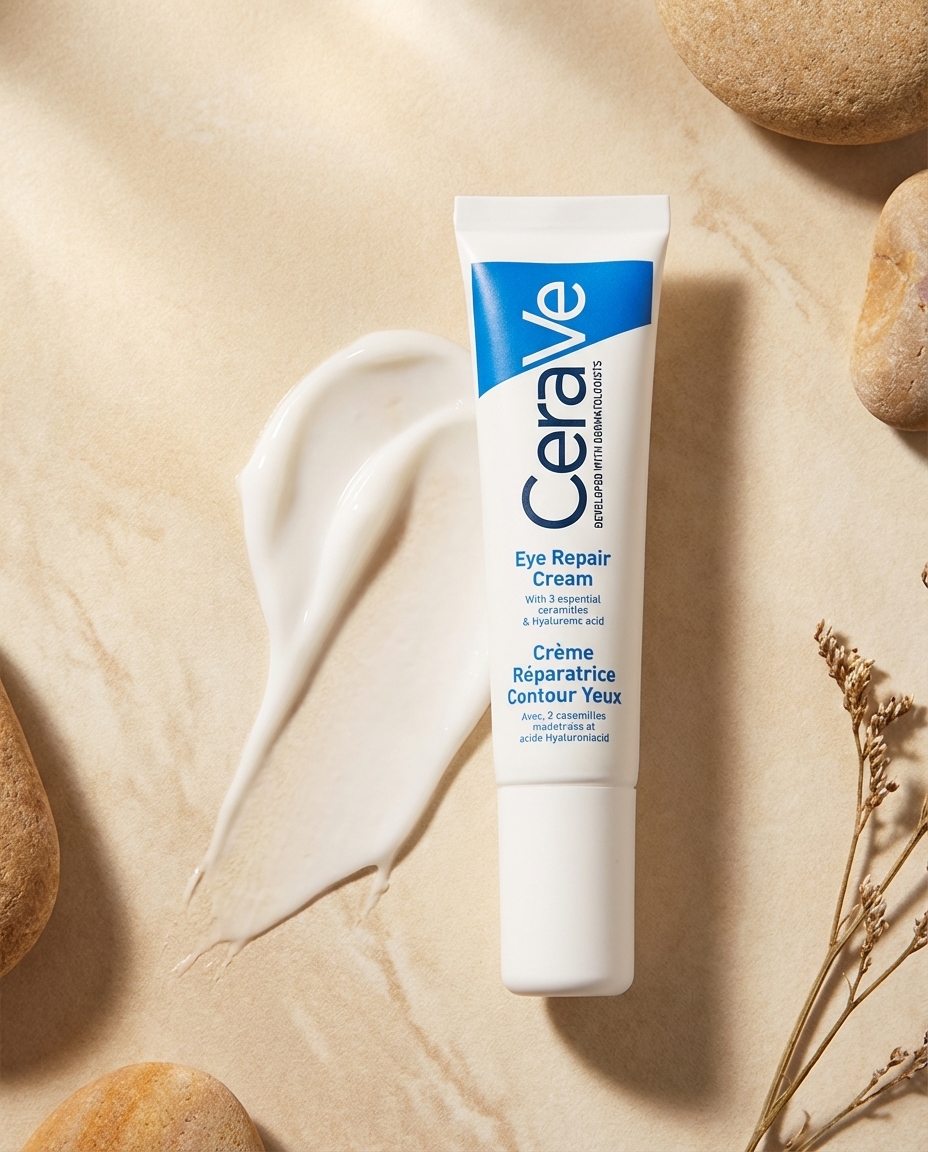
CeraVe Eye Repair Cream
by CeraVe
What We Like
- Top-rated in its category
- Well-reviewed by skincare enthusiasts
Could Be Better
- Check Amazon for current availability
Frequently Asked Questions
Are dark circles permanent?
It depends on the cause. Dark circles from pigmentation or genetics are more persistent but can be reduced with targeted ingredients. Those caused by lifestyle factors — sleep deprivation, dehydration, alcohol — respond more quickly to behavior changes.
Do eye creams actually work for dark circles?
Some ingredients are genuinely effective. Caffeine reduces puffiness and temporarily diminishes the vascular component. Vitamin K, retinol, and peptides address different aspects of dark circles over time. Results depend on using the right product for your specific type of dark circle.
Is it normal for men to have dark circles?
Very common. Men tend to have thinner skin under the eyes compared to women, making vascular darkness more visible. Lifestyle factors common in men — late nights, alcohol, high-stress work — also contribute significantly.
Can sunscreen help with dark circles?
Yes, for pigmentation-based dark circles caused by UV exposure. Sunscreen prevents new pigmentation from forming and protects existing skin from further damage. It's a prevention tool rather than a treatment.
How long do eye cream results take?
Caffeine-based products show temporary results within minutes. Lasting improvements from ingredients like retinol, peptides, or vitamin C take 6–12 weeks of consistent use. There are no instant permanent fixes.